
VISITING ANTIBES: A CHARMING OASIS ON THE CÔTE D’AZUR
Updated: Feb 12
Antibes, France
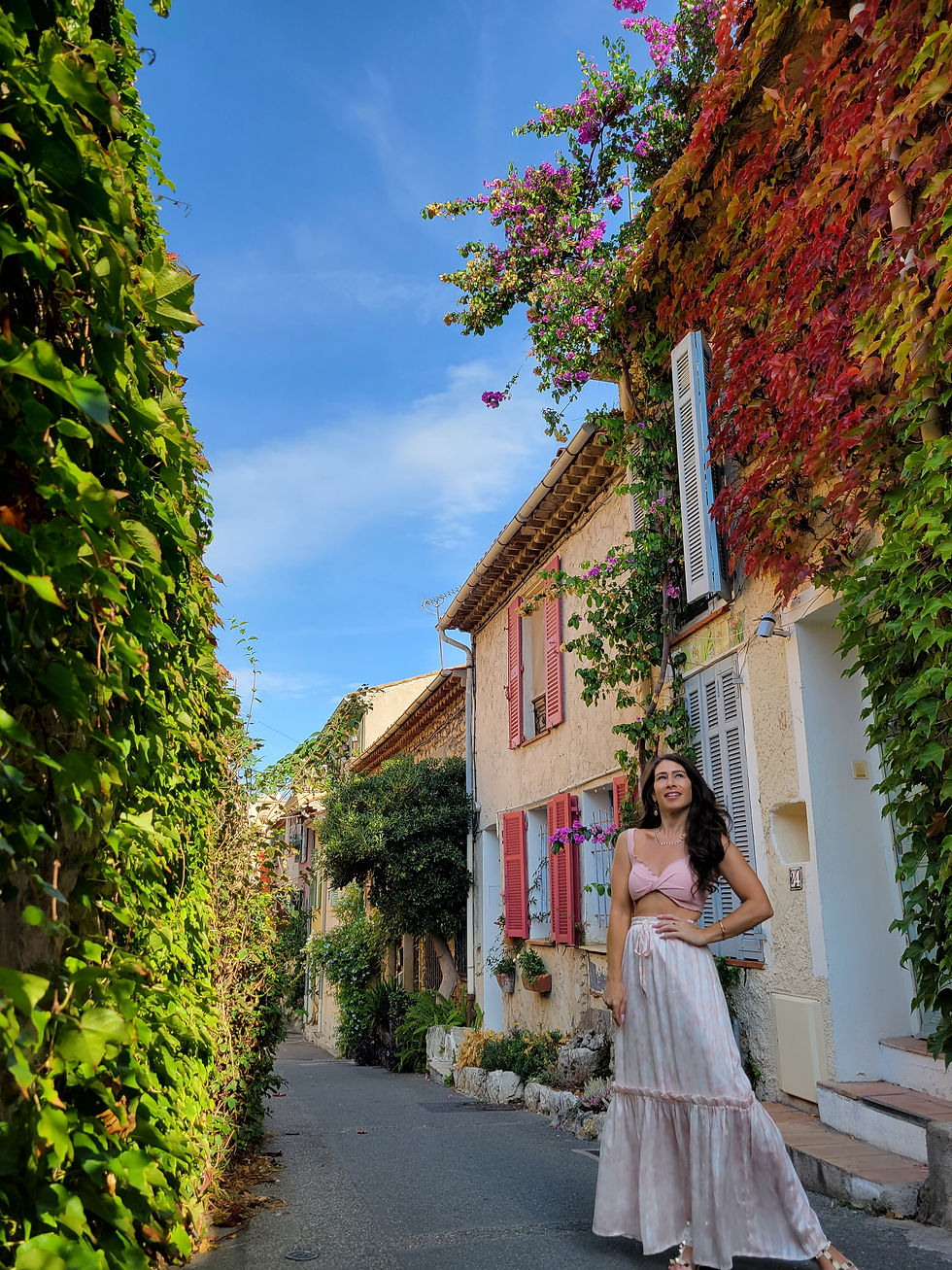
On the French Riviera, nestled between the glitz and glamour of Nice and Cannes, lies the charming city of Antibes. Quintessentially French, the food is superb, as is the wine, but the ambiance is the real prize in this picturesque city on the Côte d'Azur. The pace here is leisurely and calm, even in the high summer season, a natural respite from the hustle and bustle of the throngs of tourists that descend upon this region yearly. Dating from the 17th century, you’ll find meandering cobblestone walkways, medieval fortifications, flowers and foliage cascading from the colorful window sills, and sunny plazas dotted with eclectic cafes.
PLANNING YOUR VISIT
GETTING THERE: There is no airport, but getting here is easy, just a short, inexpensive train ride (under 10 Euros) from either Nice (30 min) or Cannes (15 min), or a short car/taxi/ride-share, making a day trip from either place a must-do on any South of France traveler’s list.
GETTING AROUND: Once you arrive, no car is needed. The city is small and easily walkable. It is about a 10 minute walk from the train station to Port Vauban on the edge of the Old Town.
HOW MUCH TIME TO SPEND: A day trip is sufficient, although you will likely want to go back to spend more time.
WHEN TO VISIT: Summer (July-August) is when Antibes is most alive- there are many events, the flowers are in bloom, lavender products are widely available, and there is hardly a drop of rain. The downside is that it can be extremely hot and more crowded than other times, so it can be difficult to find a seat for an apéro, and you are recommended to make meal reservations if you are set on a particular restaurant. Shoulder season (May-June, September/October) is the ideal time to plan a trip. The weather is perfect- warm days and cooler evenings, and the atmosphere is lively, but not crowded- although rain is possible and sometimes frequent depending on the month. The rest of the year can vary, winter can get rather cold, and the city will be quiet, but you can find more affordable accommodations.
WHAT TO SEE & DO
PORT VAUBAN
Starting from the modest train station in town, as you walk towards Old Town Antibes, you'll first come across Port Vauban, the harbor filled with an array of docked ships. The sunlight dances on the shimmering blue water, and the ocean's scent fills the air. While small to medium-sized boats mainly occupy the area, spotting an elegant yacht is not uncommon.
LE FORT CARRÉ
Look out into the distance, past the ships in the port, you can see the striking Le Fort Carré sitting high on the hill. Dating from the Renaissance, it was one of the first fortified strongholds to be built by the King of France. It boasts an unusual architectural star shape, a result of precise mathematical principles applied to its design. A visit to this historic gem and its 141 ft /43 meters high walkway offers incredible views of the surrounding area amongst gardens filled with Mediterranean flowers and vegetation.


BASTION SAINT-JAUME
Rounding the harbor, heading towards Old Town, you will encounter the walled fortification the Bastion Saint-Jaume, separating the port from the sea. Climb up the short staircase to the upper level for water views from between the ancient stone battlements. The fortification, built in the 17th century, offers a glimpse into the military architecture of the time, characterized by its robust walls and strategic positioning. As you stroll along the ramparts, you can admire the stunning vistas of the Mediterranean Sea and the surrounding coastline.
PLAGE DE LA GRAVETTE
On the opposite side of Port Vaubon, the Bastian’s fortified walls provide the framework of the semicircular beach at Plage de la Gravette. On a summer’s day you will see the sand dotted with colorful towels and umbrellas while beach goers take a dip in the calm water that ripples at the shore. The view of the beach framed by the ancient walls with the boats and Fort in the distance is especially pretty on a summer's day.

LE NOMADE
Walking away from the direction of Old Town along the upper wall of the Bastion Saint-Jaume (the part of the ramparts adjoining the port), you will encounter the colossal sculpture, Le Nomade, by the sculptor Jaume Plensa. Despite its size, at 26 ft /8 meters high and 6 tons of steel, the sculpture appears light and airy; almost creating a mystical aura of contemplation as the seated faceless man stares out across the sea. The form is designed as a latticework of white stainless-steel letters that glitter in the sun, against the backdrop of a blue sky meets water. The beautiful setting invokes playful contemplation as people wonder what the letters spell and what is their meaning. Part of a temporary exhibition from 2007, the city, in collaboration with the Musée Picasso, purchased the piece and made it a permanent fixture in 2010. "It’s an open piece, inviting people to enter it, like a grand-mother embracing her children." - Jaume Plensa.

COMMUNE SAFRANIER

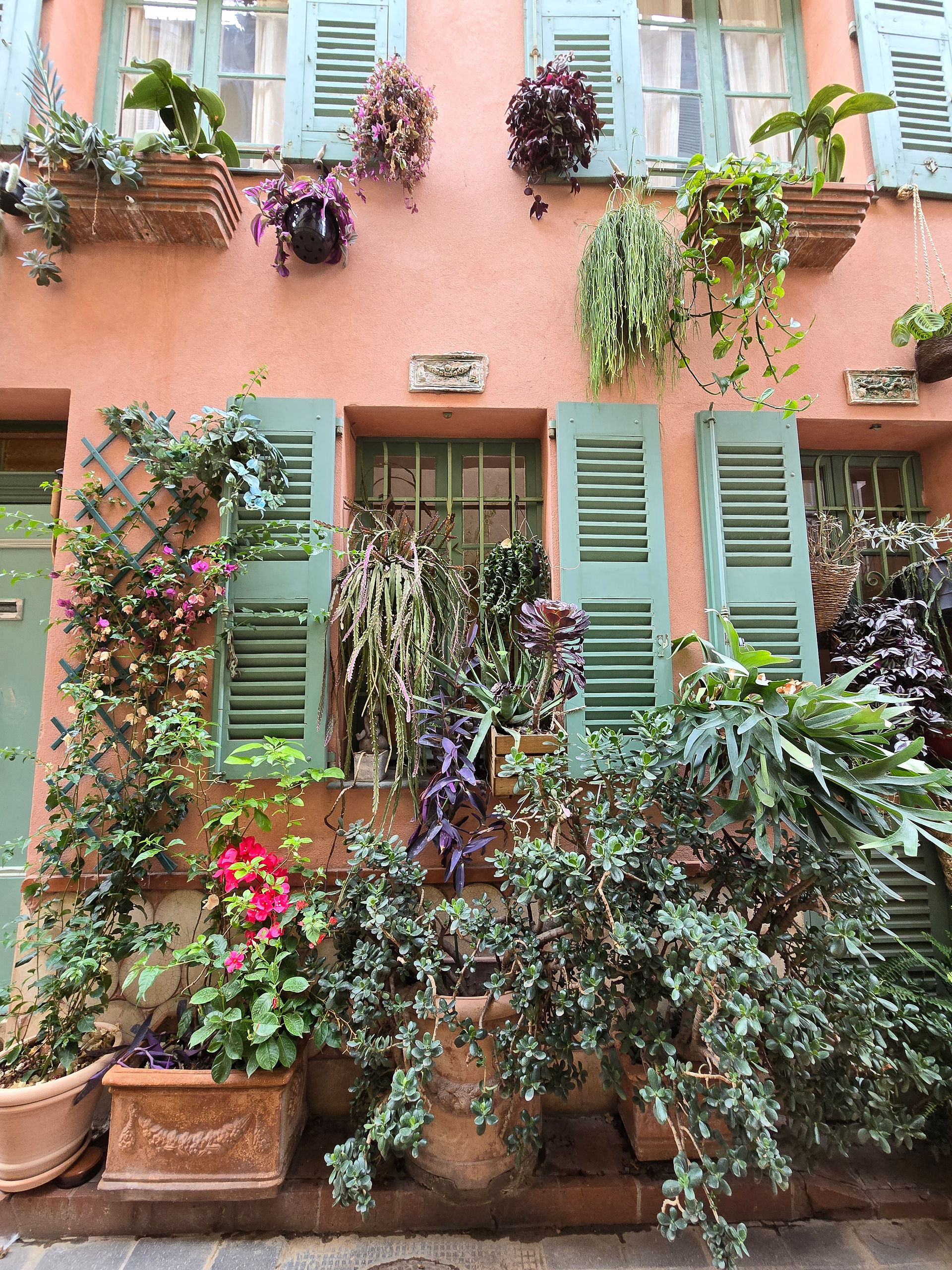
Antibes is filled with windy, floral-filled streets where every turn unveils a picturesque new scene. Many of the cobblestones are marked with intricate white patterns lending to the general photogenic quality of the area. However, the most ornate and beautiful undoubtedly belongs to the tiny Commune Safranier, just a short walk up the coast on Rue de la Touraque from the Picasso Museum. This beautiful little neighborhood was begun in 1966, by a group of friendly hippies that wanted to preserve their traditions; today it is bursting with vine covered buildings, walkways lined with flowers and foliage, rustic pots displayed next to colorful doorframes, chirping birds and meandering butterflies, with the occasional passerby on a bicycle. The free commune hosts an array of festivals and fairs throughout the year, and in its quiet days its entirely quaint and relaxing ambiance well-suited to a couple hours on a sunny day taking the time to enjoy all the details as the sun casts intricate patterns of shade through the trees.


LE MARCHE PROVENCAL
In the center of town you will find Le Marche Provencal, a modest open-air area that invites you to immerse yourself in the vibrant atmosphere, sample delicious treats, and engage with friendly vendors, making it a perfect spot to experience the authentic flavors and culture of the region. You might find local artists selling their paintings, jewelry-makers, fromage and locally-made jams, vintage clothing, or other artisanal wares.
ABSINTHE BAR

Adjacent to the market and with seating under Le March Provencal is the Absinthe Bar with its vibrant green awning. Here you can relax for a drink of the distilled, anise-flavored spirit, also known as the “Green Fairy”. The menu is expansive and filled with varietals grouped in order of sophistication and cost, from Blanche to Verte, Superieure to D’Exception. Don’t be daunted by the menu as the service here is superb ; the helpful staff are happy to share their knowledge and expertise in guiding you to choose the perfect absinthe for your palette and budget, then through the process of what to do with the liquor once it is served at your table in the tall and intricate "absinthe drip" guiding you to decide how much sugar and water to allow to drip over the absinthe for the perfect blend. The result is sure to be a delicious and fun experience, not to mention the perfect way to spend an hour out of the hot summer sun.
JARDIN DES POÈTES (POETS' GARDEN)
Along the promenade, visitors can find the Jardin des Poètes, a small area of mostly cacti and succulents. The garden also hosts temporary art exhibits such as the work of French sculptor Nicolas Laverenne, whose life-size human figures, in various stages of dance, sport and play added a fanciful touch to the peaceful garden.


MUSÉE PICASSO
Not to be missed is the Musée Picasso (Picasso Museum), sitting high on a hill overlooking the coast. This 14th century castle, originally named Château Grimaldi, was the former residence of the Lords Marc and Luc Grimaldi, and later became the Grimaldi Museum. In 1946, the museum offered Pablo Picasso a chance to set up his studio in the Chateau. He spent six months working here, creating drawings, paintings, sculptures, and other works of art. This experience was so inspiring that it commenced the love affair Picasso embarked upon with this beautiful region of France. He lived and worked in the Cote d’Azur, purchasing a home on Antibes and a few in other places, from 1946 until his death in 1973. Upon his departure from the Chateau, Picasso donated to the museum 65 works of art, and in time, the museum has gone on, through purchases and donations, to acquire a total of 245 pieces. It officially became the Picasso Museum on December 26, 1966, the first ever museum dedicated to the living artist. A large collection of other modern art by various artists is also displayed.
Although the artwork in the museum is superb, don't miss the rooftop terrace - a remarkable oasis.
Although the artwork in the museum is superb, don't miss the rooftop terrace- a truly remarkable oasis. Decorated with various sculptures, botanical plants, and mosaics, it boasts a breathtaking view out to the Mediterranean Sea. Here, you can fully appreciate how Picasso was so inspired by this glorious light and the serenity of this peaceful town, which, in turn, sparked his creative genius.

COASTAL WALK ON THE PROMENADE
In my opinion, one of the prettiest views can be found in a leisurely walk along the Promenade Ameral de Grasse which runs along coast and lazily winds around the mountain separating the stone-colored historic buildings from the sea. The promenade is dotted with whimsical sculptures, amongst the colorful wildflowers that grow to the edge. Peering over the side you can see a palette of green and rust colors of the stained rocks cascading down to where the waves of the sea crash against their sides. I never miss taking a stroll here every time I come visit.


WHERE TO SHOP & WHAT TO BUY
To remember your time in Antibes, there are some notable items you can purchase. Wandering around the town center, you can find a multitude of shops selling decadent, and aromatic, lavender, lemon (citron), and truffle, in an assortment of products, as they are abundant here and very traditional to this region of France. Many shops also sell handmade items from local pottery and painters to jewelry and clothing.
WHAT TO EAT & WHERE TO DINE
Throughout the city there are a plethora of boulangeries, enchanting cafes, and top notch restaurants, most with outdoor seating, and delectable food and drinks for a leisurely meal, or apéritif. As Antibes is located in France but not too far from Italy, you will find both cuisines plentiful- plenty of fresh seafood, tender meats, and pasta, all on the menu at one of my most-loved, Nacional Trattoria. Make sure to enjoy some of the local treats - such as French rosé wine, truffle, and in the summer months - lavender-flavored gelato (my favorite!). And if you really want to step it up, there is no shortage of fine dining, such as L'Arazur, on the Michelin Guide; a perfect reminder that you are in the South of France, after all.


Regardless of how you choose to spend your time in Antibes, you are sure to enjoy your visit. The walkable city can be enjoyed at leisure, and is truly one of the not-to-be-missed places on the French Riviera. Chances are, if you miss anything you wanted to see, you'll find a way to come back and experience the magic again.


Comments