
HOW TO SPEND 1 WEEK IN EL SALVADOR
Updated: Feb 18
San Salvador, El Salvador

When I decided to take a trip through El Salvador, it was a last minute add on to Guatemala, and I wasn’t sure what to expect. I had thought El Salvador was one of the places that was dangerous to visit, but in recent times, I'd been hearing it had become a safe destination to travel to. I did some research and decided it would be a shame to pass up the opportunity, so I decided to go. I knew I’d be balancing work with sightseeing, and I wanted to get a mix of city culture, Mayan history, and natural beauty. What I found was a country full of surprises: friendly people, volcanic landscapes, vibrant art, and a thriving capital city that was very different from what its (former) reputation suggests.
Here’s how my trip unfolded....
DAY 1: ARRIVAL & EXPLORING DOWNTOWN SAN SALVADOR
HOW TO GET TO EL SALVATOR FROM GUATEMALA
There are two ways to get to El Salvador from Antigua or Lake Atitlán, Guatemala, where I was coming from. The first is to travel back to the nearest airport in Guatemala City and fly direct to San Salvador, the capital of El Salvador. The second is to travel by charter bus from Antigua, Guatemala to El Tunco, El Salvador, the drive is roughly 5 hours, and another hour to San Salvador. There are numerous companies that offer this service- ranging from around $45USD to $85USD, depending on the company and time of day.
I caught the 4:30 am Roony Shuttle from Antigua, Guatemala, down to El Tunco on El Salvador’s Pacific coast ($40USD). It was a long ride, but painless — although we were randomly dropped off on the side of the road in El Tunco, which is about 35 minutes from the capital, San Salvador, where I was headed. That was not the best surprise, and could have been disastrous since there were no taxis around and we couldn't tell if we were at a bus stop or if one was coming and to where it would be headed. Thankfully, I had cell signal and there was Uber. So I hailed one and invited the other stranded passengers to join me as I continued inland to my base in San Salvador.

CITY WALKING TOUR
I love starting in a new city on a walking tour. It gives you an informative overview of the highlights, teaches you about the culture, and many times, if you're solo- you can end up meeting people to explore with. Usually I try to find a "FREE" tour (which is not free, but rather does not have a set fee - instead you tip). I love these because the guides are always engaging and motivated since they work on tips.
After arriving at my hotel in Zona Rosa, one of the safest areas of the city, I spent a few hours working then I took an Uber to downtown, where I joined a GuruWalk Free Walking Tour with Carlos.
On this tour, it ended up being just me and one other woman, which made it feel more like a private tour, which was also great. The itinerary was superb and we hit all the major sites. We began in Liberty Square, where Carlos gave an overall history of the country and city of the spectacular Iglesia El Rosario - we hit it as the sun's rays lit up the interior- its rainbow stained glass against steel arches was truly breathtaking and unforgettable.

Next, we went into the Metropolitan Cathedral which also held the the crypt of Monsignor Romero, the National Library, a sleek new building gifted by China, and passed by he National Palace which was under renovation. Then we walked around the revitalized area of downtown, and the Central Market, stopping to taste some of the delicious and exotic fruit available. His tour was fantastic and I learned so much.


What I found almost incredulous was that we walked through what was formerly (albeit just a couple years ago), the most dangerous area of "The Murder Capital of the World"; the area just outside the Mercado Central where two rival gang territories crossed. Carlos showed us pictures of what the area had been like before and told us no way would we have been in this neighborhood, and certainly not as dusk approached. Since then, it was cleaned up, the building now boasts a vibrant mural, and the area is safe to walk around, even heading into dark. We finished our tour at a local Salvadorean restaurant in downtown where Carlos had me try a papusa- one of the traditional Salvadorean staple items- a thick, and-made tortilla stuffed with cheese and meat. It was delicious.

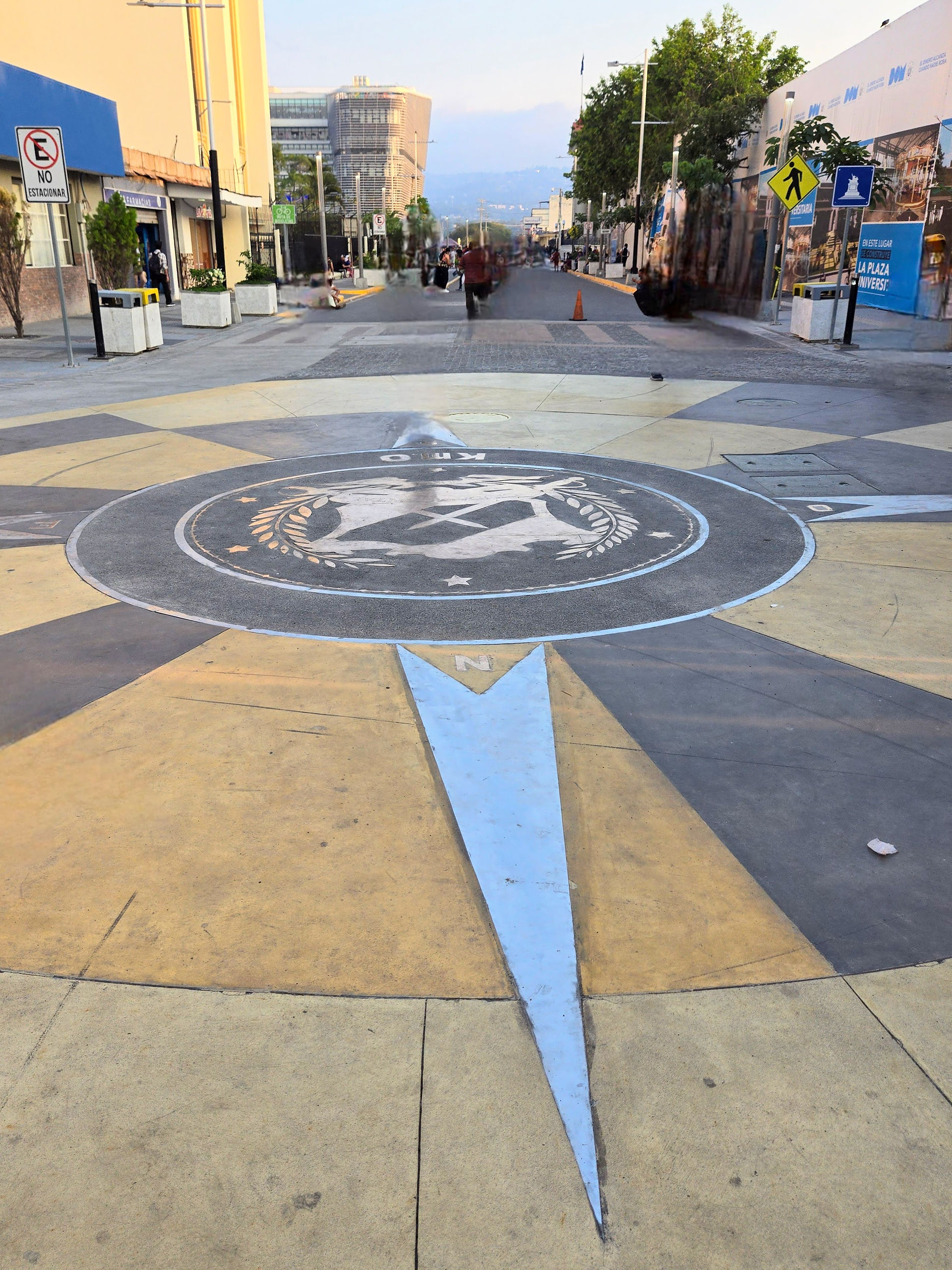
Downtown is also largely regarded as a safe area today, and as sunset drew near, the buildings lit up, there were street performers with live music, and lots of people taking pictures of the San Salvador sign, kids playing and a general atmosphere of joyfulness. But once darkness hit, the area did become noticeably emptier.
My Uber ride home was a bit tricky to arrange — a number of drivers canceled, and I did get a little uneasy standing alone in the dark. Finally, one came to pick me up and I went back to my hotel.

DAY 2: MAYAN RUINS, LAKE VIEWS, & A NIGHT OUT
Since I wasn't renting a car, I decided booking day tours as the best way to see some other sites in El Salvador, since many of them were outside of the border of the city of San Salvador. Today was Saturday, so booked a full-day Viator Combo Tour with Salvadorean Tours. I was picked up at my hotel in a nice air-conditioned minivan and introduced to our guide, Alfredo. We began the tour at Joya de Cerén (a UNESCO site, and Mayan pre-Hispanic farming village in El Salvador, renowned for its exceptional preservation under volcanic ash, often called the “Pompeii of the Americas”), Here, Alfredo walked with us while he explained in detail the history of the ancient community, where each activity would have taken place and what daily life would have been like during that time.

Next, we continued to Parque Arqueológico San Andrés, a pre-Columbian city with temples and plazas, occupied since 900 BC, and one of the largest pre-Hispanic centers in El Salvador.

Lunch came with sweeping views over Lake Coatepeque, a shimmering volcanic lake, which is named for "the hill of snakes" or "snake mountain" in the Nahuatl language of El Salvador, where the lake is located. The name likely refers to a legend about a giant snake dwelling in the lake or simply to the snake-like shape of the caldera's shoreline. We had a delicious and enjoyable meal that was animated with lively conversation from all of us on our small group tour.


Finally, we drove up Cerro Verde National Park for panoramic volcano views. The park, in itself, was so much fun to explore, with trees you could climb into, wildly shaped, and a proper hike through the forest. We met up with a Park Guide who explained the flora and fauna found in the park, supplemented by our incredibly knowledgeable and friendly guide. Later that evening, another traveler from the tour and I went for dinner and drinks at Black Rose at Craft, a stylish rooftop lounge with a well-dressed crowd and live music. The perfect way to cap off a long day.
Our Guide, Alfredo, told us that if you come to visit, he recommends focusing more time on Lake Coatepeque — locals say weekends are the best time, when families rent chalets and the shoreline comes alive.
DAY 3: RUTA DE LAS FLORES, HOT SPRINGS, & ADVENTURE
On Sunday, I booked another all day tour with Aventurs Tours with Allan, who I had met back in Antigua while walking around one day. We had exchanged information and he told me if I made it to San Salvador, I should come on one of his tours. Aventurs takes small groups to all of the best locations in San Salvador- from hidden waterfalls to hiking trails, and to many of the major tourist destinations. Our group was a mix of Salvadorans & travelers, speaking multiple languages. Again, I was picked up in a nice air-conditioned mini van to start our truly jam-packed day. As the name implies- this tour was full of action and adventure!
TERMALES DE SANTA TERESA
We began with a drive to our first stop, the Termales de Santa Teresa; an expansive complex of volcanic hot spring pools, each with varying temperatures. The property harmonized beautifully with the natural surroundings, and featured changing rooms, a restaurant, and lounges, making it a true hidden gem. Without this tour, I would never have discovered it. We spent a few hours unwinding here in this oasis before changing and moving on to our next stop.

RUTA DE LAS FLORES
Next, our drive took us along the Ruta de Las Flores, a picturesque route that connects several charming villages, known for their vibrant coffee plantations and stunning landscapes. We stopped in Concepción de Ataco, a small village filled with colorful murals about the local culture, a beautiful garden, handicraft shops and street vendors. We stopped for lunch here and took some time to walk around.
If you have more time, spending a day traveling along the 44km /27 miles Ruta de Las Flores will give you an opportunity to visit some of the other small villages along the route, such as Nahuizalco, Salcoatitán, Juayúa, Apaneca, and Ahuachapán. November to February is peak season for seeing the flowers in full bloom.

Our final stop was a surprise add-on to Albania Park, a colorful theme park in the mountains, with the famous rainbow slide, a bird swing that soared over the landscape for those who are not faint of heart, and a giant labyrinth hedge maze we all hilariously got lost in for over an hour. I could hardly believe how much fun I had on our jam-packed day! Even better was that I got to make some new friends. This is why I love traveling - you never know where you might end up or who you might meet.


It was almost a two hour drive back to San Salvador, and when they dropped me off at my hotel I was completely exhausted.
If you come to visit and have some extra time to spend in Ataco, it is recommended to go to one of the local coffee plantations that offer tastings and tours.
DAYS 4-6: TAKE YOUR PICK OF ACTIVITIES
If you have extra days in El Salvador, there are lots of other activities you can take advantage of, especially if you are an outdoor enthusiast. Nonetheless, those interested in history and culture will also find numerous opportunities to fill their schedule.
EL TUNCO BEACH
El Tunco is the beach town on El Salvador's Pacific Ocean's Coast, located about an hour's drive from San Salvador, where I was originally dropped off. There are direct buses and you can easily take an Uber between San Salvador and here to reach it. Lots of travelers split their time between the city and this area of black sand beach, especially those that enjoy surfing as this is a big surf spot! There are a variety of accommodations here, from low budget to boutique hotels, most just a short walk to the beach. It is known as a big party spot, frequented by younger crowds, not just for the inexpensive accommodations but also the lively nightlife.
LAKE COATEPEQUE
As mentioned, Lake Coatepeque is a giant crater lake in Western El Salvador, whose blue water occasionally turns a brilliant turquoise. It's a premier destination for all kinds of water activities such as kayaking, boating, jet-skiing, and diving. This is a great day trip from San Salvador, or you can overnight at one of the many private homes, hotels, or camping sites in the area.
TAMINIQUE WATERFALLS
For the more hardcore nature lover, head to Taminique Waterfalls, not far from El Tunco Beach, on the Southern side of El Salvador. Here you can hike along a gravel, rocky path to encounter the 40 meter / 131 feet Taminique Falls, take a refreshing dip in the natural pools, or brave some rock-climbing. Finding the waterfalls requires some knowledge though, so best to book a group tour, such as the one from Aventur Tours.
PARQUE NACIONAL EL BOQUERÓN / EL BOQUERÓN NATIONAL PARK
Perched on the outskirts of the city of San Salvador is the San Salvador volcano, at 1800 meters / 5,905 feet above sea level, featuring El Boquerón, the giant volcanic crater, and El Boquerón National Park. Here you can find loads of hiking trails, from easy to expert, with lush vegetation and colorful flowers, and dramatic views of San Salvador and a mini-me crater inside the larger one. In addition, there is another, popular Rainbow Slide here as well, located at Picnic Steak House on the side of the volcano.
SUCHITOTO
For those who want to experience more of El Salvador's history, they can head to Suchitoto, located in El Salvador's Cuscatlán department, about an hour from San Salvador. This was the nation's first capital, and features well-preserved example of colonial architecture, local markets, art galleries, and lots of places to dine and relax.
MUSEO DE ARTE (MARTE) / THE MUSEUM OF ART OF EL SALVADOR
For me, after all this excitement over the weekend, Monday was back to a normal workday. Late afternoon I took a break to go to the Museum of Art of El Salvador, which happened to be a short walk from where I was staying in Zona Rosa. The Museum is marked by the Monument to the Revolution, an enormous mosaic stone monument depicting a symbol of freedom. At the time I visited, the museum had a large collection of local art depicting how the political and technological development of the last couple decades influenced local art.

SHOPPING

Both Presidente Plaza Mall (at the time it was still under development) and Bambú City Center, located in Zona Rosa, offer lots of shopping opportunities. Both are modern malls with plenty of restaurants and shops, from souvenirs and local artisinal hand-made goods to brand name clothing and accessories. Downtown El Salvador also has a mix of local mercados, such as the Mercado Ex-Cuartel for discounts, and major malls such as Metrocentro or Galerias for local and international brands.
Also, each of the small villages along the Ruta de Las Flores has many vendors with local handmade goods.
DINNER ON TOP OF A VOLCANO
After a day of work, I went with one of my new friends to La Pampa, an upscale Argentinian steakhouse perched on the slopes of the San Salvador Volcano. I'd never dined on top of a volcano before! The restaurant features a giant wraparound terrace that overlooks the city, and the tenderloin with Malbec was superb. the best meal I had in El Salvador.
DAY 7: DEPARTURE
My Uber driver picked me up at 3:30 am for the airport. Driving along the well-lit highway, he spoke in English and told me about his years working in the US in fine dining restaurants in Malibu, California before being deported in 2018, for being an undocumented migrant. He said he loved the US and worked hard to achieve financial independence, had lots of friends, and enjoyed living in Los Angeles. But despite the hardships, he thinks life in El Salvador now feels more fulfilling - he isn't on edge wondering if he would get caught, and — “here, I have everything I wanted: a house, a wife, a kid.” It was one of those conversations that stays with you after a trip.
BEST TIME OF YEAR TO VISIT
HIGH SEASON: (November - April) This is the Dry Season, and the best time for tourism with temperatures raining from 23C -30C / 73-86F, making it perfect weather to enjoy all of El Salvador's outdoor activities.
SHOULDER SEASON: Late April/ Early November: This period offers decent weather with fewer tourists.
LOW SEASON: (May - October): Expect high temperatures and high humidity at this time of year, with more tropical storms and increased rainfall.
TRAVEL TIPS
TIP 1: To enter El Salvador, US citizens only need a valid passport and a $12 tourist card (purchased at the airport). It’s valid for 90 days.
TIP 2: Center your visit around San Salvador and plan to take day trips to visit many of the attractions outside of the city. Most are only 1-2 hours away by car, whether renting a car or taking a group tour.
TIP 3: Stick to safe neighborhoods in San Salvador (Escalón, San Benito, La Cima, San Francisco, Zona Rosa). Avoid Soyapango, Apopa, and Mejicanos. Always confirm your taxi has an “A” at the start of its license plate. Uber is generally reliable, though late at night rides may be scarce. In an emergency, call 911 or the tourist police (Politur: 2511-8300).
FINAL THOUGHTS
El Salvador may be small, but it delivers so much variety in what you can do and see, with easy access to tours, if you don't rent a car. The people are friendly, and excited to have tourists come to enjoy their country. Between Mayan history, volcanic landscapes, mural-filled towns, and lively nightlife, it felt like a country still under the radar — and one I’d return to in a heartbeat.


Comments